
%20(1).png)


Lemon Verbena: The Queen of Lemon-Scented Herbs
Ancient Lore, Royal History & Modern Science
The Herb That Arrived Like Contraband
The story of how lemon verbena reached Europe is a story of botanical espionage, colonial rivalry, and the stubborn survival of a plant that seemed determined to be known. In 1785, the French botanist Joseph Dombey docked at Cádiz after eight years collecting plants in Lima, Peru. Spanish customs officials impounded his entire collection and left it to rot in a warehouse. Dombey himself was refused permission to plant so much as a seed. Among the bare handful of plants Dombey had assembled during eight years at Lima, lemon verbena survived. It was carried out — somehow, against the odds — and sent to Paris, where it was published as a new species and began its European career.
This is a plant that does not give up easily. It survived the warehouse. It survived the politics. It survived being suppressed by the more economically efficient lemongrass. It survived Victorian fashions that moved on, and found its way into the hands of Andean healers, Argentine grandmothers, French perfumers, Spanish queens, and twenty-first-century sports nutrition researchers. Whatever it is that lemon verbena does — and it does a great deal — it has done it quietly and persistently across at least five hundred years of recorded use and considerably longer in the pre-Columbian Andes where it was first understood.
Verbena is sometimes called the "Queen of Lemon-Scented Herbs" due to its delightful citrus aroma. Historically, verbena has been used not only for its fragrance but also for its medicinal properties, such as aiding digestion and reducing fever.
Names and Origins: The Herb of the Princess
Aloysia citrodora — the citrodora meaning "lemon-scented" in Latin, one of the most immediately honest botanical epithets in the plant world — carries within its genus name the story of a Spanish queen. In Latin, the botanists Ortega and Verdera gave it the scientific name Aloysia citrodia, but in Spanish they named it the "Hierba de la Princesa" — the Princess's Herb — in honor of Maria Louisa of Parma, Princess of Asturias, the wife of the Royal Garden's chief patron, Infante Carlos de Borbon. In time, the plant's Spanish name would be shortened to Yerba Luisa or even just Luisa.
Maria Luisa Teresa of Parma — who would become Queen of Spain as the wife of Charles IV — grew lemon verbena in the Royal Garden at Madrid and lent the plant her name in perpetuity. She is remembered now mostly through the herb she favored, which is not the worst of legacies.
In South America, where the plant originated, it is known by different and older names. Also known as cedrón, María Luisa, verbena de Indias, or verbena olorosa, its origin lies especially in Peru, Chile, Argentina, and Bolivia. Other names include hierba luisa, limón monte, and verbena odorosa.
In the Quechua language of the Incas it is wari pankara — a name that connects it directly to the most sophisticated civilization in pre-Columbian South America, and to the Kallawayas, the group of traditional itinerant healers in the Andes who carried botanical knowledge across enormous distances, serving communities from Colombia to Argentina as ambulatory pharmacists of extraordinary skill.
The Incas and the Kallawayas: The Oldest Knowledge
The archaeological evidence indicates that lemon verbena has been used as an ingredient in South American cooking and folk medicine since ancient times. It is believed that the Inca Empire — circa 1200 to 1572 — were the first people to discover the medicinal benefits of this botanical. The Inca boiled the leafy stems of lemon verbena to make a medicinal tea.
First reports of the use of this species date from the 17th century, as it was widely used by the Inca culture as a digestive, antispasmodic, and for bronchitis and heart problems.

The Kallawayas — sometimes called the last walking pharmacy of the Andes — were a hereditary caste of healers who traveled throughout the Andean world carrying their knowledge of medicinal plants in extraordinary oral traditions, augmented by collections of dried herbs and precise knowledge of preparation, dosage, and combination. They treated the Inca nobility, served communities across the altiplano, and maintained a pharmacological sophistication that astonished the Spanish physicians who encountered them in the sixteenth century. An ethnobotanical study of the Kallawaya documented that lemon verbena was used for bronchitis.
In South American folk medicine, lemon verbena tea has a long history as a trusted botanical for reducing fevers and treating a variety of digestive disorders including constipation, diarrhoea, and flatulence. In Argentina, lemon verbena tea is used as an antidote for the bites of poisonous animals.
The use for poisonous animal bites is striking — it suggests that lemon verbena's antimicrobial and anti-inflammatory properties were understood, through empirical observation across generations, to address the systemic effects of envenomation. This is the kind of application that emerges not from a single discovery but from centuries of careful watching: who was bitten, what was given, what happened.
The Spanish Botanist's Circumnavigation
The first European botanist who publicly noticed lemon verbena was the French Philibert Commerson, who collected it in Buenos Aires on his botanical circumnavigation with Bougainville, about 1767.
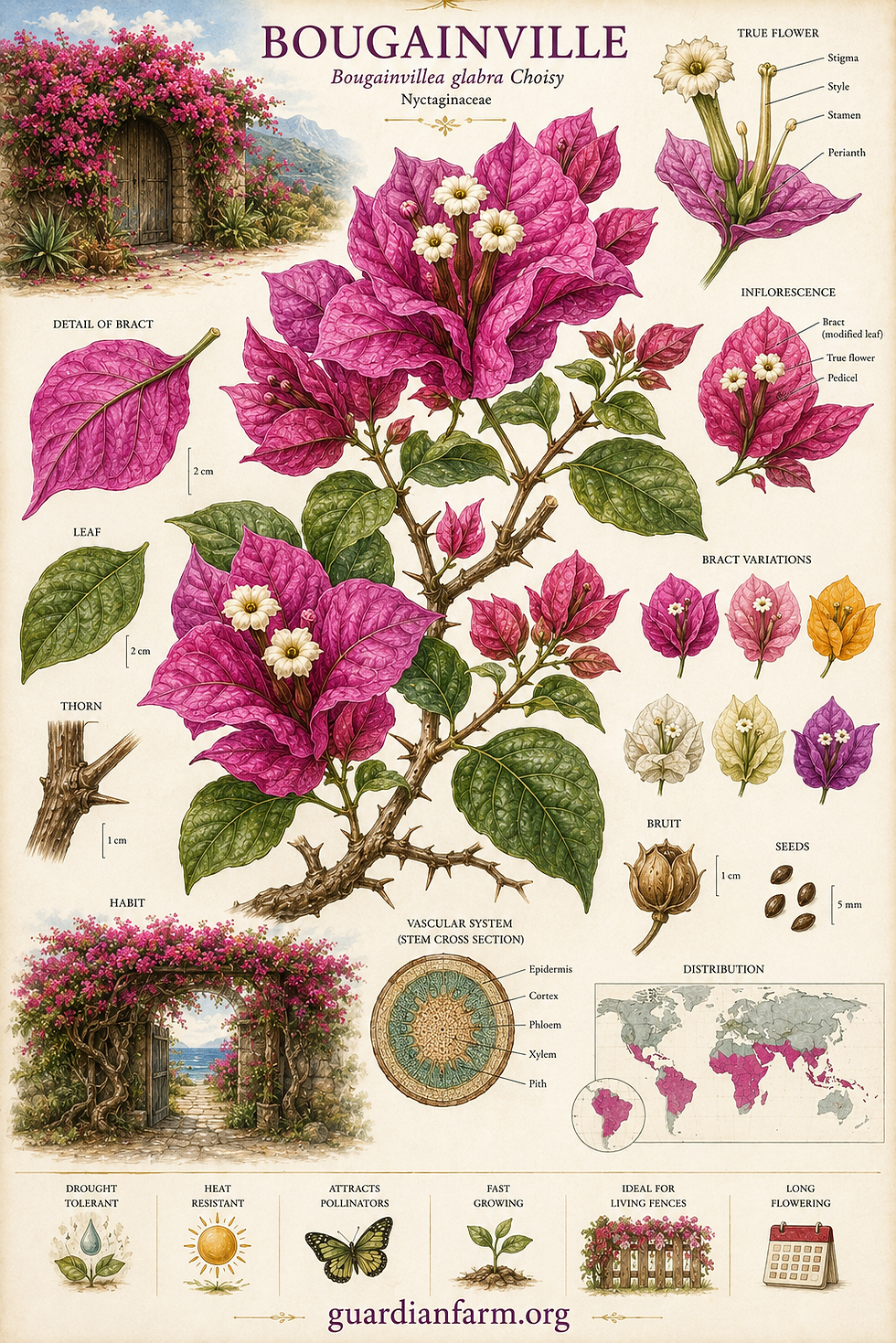
Commerson was one of the great botanical explorers of the eighteenth century — the man who documented the bougainvillea (which he named for his captain) and dozens of other South American plants that European science had not yet formally recorded. He found lemon verbena growing in the suburban gardens of Buenos Aires, where it had already been domesticated from its wild Andean origins. Its fragrance stopped him immediately.
Of all the plants that Dombey introduced, the most interesting is lemon-scented verbena. This shrub, which rises to 15 feet, is of all the plants that can be cultivated in Europe, the one whose foliage has the most delicious scent.
From Paris, John Sibthorp, professor of botany at Oxford, obtained the specimen that he introduced to British horticulture: by 1797 lemon verbena was common in greenhouses around London, and its popularity as essential in a fragrant bouquet increased through the following century.
The speed of this adoption is remarkable. Within a decade of formal European publication, lemon verbena had passed from Andean herb garden to Parisian scientific literature to Oxford greenhouses to London drawing rooms. The fragrance alone was enough. Nothing else needed to be explained.
Victorian England: The Herb in the Handkerchief
Lemon verbena was a very popular scent with Victorian ladies who sewed the fragrant leaves into the darts of their dresses, tucked them into their handkerchiefs and nosegays, and floated them in finger bowls of water.
The Victorians — who lived without refrigeration, in cities without sanitation, in clothing that rarely saw washing — understood fragrance as both aesthetic pleasure and hygienic necessity. The herbs and flowers they carried in their handkerchiefs and sachets were also, in many cases, antimicrobial agents. Lemon verbena, with its citral-dominated essential oil that disrupts bacterial cell membranes, was both a pleasure and a protection.
It began to be cultivated in Europe in the 18th century and was used for fragrance and for the "vapors" in Victorian times. The "vapors" — a Victorian catch-all diagnosis for anxiety, hysteria, faintness, and nervous exhaustion, disproportionately applied to women — were treated with aromatic herbs held under the nose, inhaled deeply, carried close to the body. The therapeutic logic was imprecise by modern standards but not wrong: inhaled volatiles from lemon verbena interact with GABA receptors in the brain, producing calming effects that are now documented in clinical trials. The Victorian ladies who reached for their lemon verbena handkerchiefs when they felt overwhelmed were self-administering anxiolytics. They did not know the mechanism. They knew the effect.
In the 1939 film Gone with the Wind, lemon verbena is mentioned as the fragrance favoured by the heroine Scarlett O'Hara's mother. The description reads: "The faint of lemon verbena surrounded her, floating gently from Eleanor Butler's silk gown and silken hair. It was the fragrance that had always been part of Ellen O'Hara, the scent for Scarlett of comfort, of safety, of love, of life before the War."
This passage — from Margaret Mitchell's novel, set in the antebellum American South — captures something important: lemon verbena as a scent of comfort, of a particular kind of safety, of love remembered. The herb as olfactory memory, as emotional anchor, as the fragrance of a person you have lost. This is not pharmacology. It is the deeper medicine of smell, which bypasses the rational mind entirely and arrives directly in the limbic system, in the place where emotional memory lives.
The Perfumers of Grasse
In the 19th century, at the height of Grasse's garden prominence, fragrant verbena and its essential oil became one of the primary raw materials for the famous Eau de Cologne. Alongside mint, anise, and lavender, lemon verbena has transcended time and trends, lending its delicate invigorating scent to some of the most renowned perfumes.
Grasse — the perfume capital of the world, perched in the hills above the French Riviera — built its fortune in part on lemon verbena. The town's perfumers, working with extraordinary olfactory sophistication across generations, understood the citrus-floral-herbal complexity of lemon verbena's essential oil as something irreplaceable: brighter than lemon itself, more complex than lemon balm, warmer than lemongrass, with a luminous quality that no synthetic has fully replicated.
The major isolates in lemon verbena oil are citral (30–35%), nerol, and geraniol. Citral — the aldehyde responsible for the lemon fragrance — is present at concentrations similar to lemongrass but in a more complex matrix, modulated by nerol's softer, rose-like warmth and geraniol's floral sweetness. The result is a fragrance of unusual depth and persistence: intensely citrus on first contact, evolving toward something rounder and more complex, remaining in the air long after the herb has been removed.
This complexity is itself pharmacologically significant. Nerol and geraniol, like citral, are terpenes with documented antimicrobial, anti-inflammatory, and anxiolytic properties. The fragrance is not incidental to the medicine — it is the medicine's first interface with the body, entering through the olfactory nerve, the only sensory system that projects directly to the limbic brain without passing through the thalamus.
The Chemistry: Verbascoside and the Polyphenol Matrix
The medicinal activity of lemon verbena rests on a phytochemical profile dominated by one extraordinary compound: verbascoside — also known as acteoside — a phenylethanoid glycoside that is the most abundant polyphenol in the plant's leaves and the subject of the most intensive pharmacological research.
Aloysia citrodora is an herb that exhibits neuroprotective, antioxidant, anticancer, anxiolytic, anesthetic, sedative, and antimicrobial activities. These biological activities have been attributed to the presence of high levels of the polyphenol verbascoside. Some of the mechanisms through which lemon verbena exerts its beneficial activities include: increasing sensitivity to the relaxing GABA-A receptor, enhancing expression of neuroprotective brain-derived neurotrophic factor (BDNF), and enhancing production of serotonin, noradrenaline, and dopamine.
This mechanistic profile is extraordinary in its breadth. Verbascoside simultaneously works on GABA receptors (the brain's primary calming system), increases BDNF (the protein that promotes neuronal growth and survival, deficient in depression and neurodegeneration), and modulates serotonin, dopamine, and noradrenaline (the neurotransmitter triad that governs mood, motivation, and stress resilience). It is, in this sense, a natural compound that addresses multiple aspects of mental and neurological health simultaneously — through mechanisms that pharmaceutical research has spent decades trying to target individually.
The essential oil of lemon verbena is rich in citral (30%), responsible for its aroma, with carbides (limonene), terpenic alcohols (linalool, terpineol), cineol, and a sesquiterpenic aldehyde (caryophyllene).
Sleep: The 2024 Clinical Evidence
Seventy-one healthy subjects with sleep disturbances participated in a randomized, double-blind controlled trial in which dietary supplementation with an extract of Aloysia citrodora — lemon verbena — was administered for 90 days. The mechanisms through which lemon verbena exerts its beneficial properties involve binding of the GABA-A receptor, modulation of cAMP and calcium channels, and increased expression of brain-derived neurotrophic factor (BDNF), serotonin, noradrenaline, and dopamine.
The broad spectrum of improvement with lemon verbena included the ability to sleep faster and more restfully, while also reducing the frequency and duration of complete awakenings from sleep. Notably, the study was the first to report that lemon verbena also increases melatonin production. These encouraging results warrant further studies with a larger and more diverse study population.
The melatonin finding is particularly significant. Melatonin — the hormone that signals the body's preparation for sleep — is usually produced in response to darkness. A plant compound that increases melatonin production is doing something quite specific to the biological clock, not merely sedating the nervous system but engaging the circadian rhythm's own mechanisms. This is a more intelligent action than simple sedation, and it explains why the traditional use of lemon verbena tea at night produced sleep that felt natural and refreshing rather than chemically induced.
Verbascoside, a key bioactive compound in lemon verbena extract, may act as a potential modulator of sleep by contributing to the sleep-promoting effects through modulating both the adenosine and GABAergic systems. The active compound may work synergistically with other components of lemon verbena to enhance sleep duration and reduce sleep latency.
The Andean women who prepared cedrón tea for their families each evening — as they have done for centuries — were unwittingly administering a dual-acting sleep medicine: one that engaged GABA receptors to calm the anxious nervous system and the adenosine pathway to reduce sleep latency, while simultaneously boosting melatonin production through still-unclear mechanisms. The tea worked. It still works. Now there are randomized controlled trials to say so.
Muscle Recovery: The Athlete's Herb
One of the most surprising and rigorously documented areas of lemon verbena research involves exercise recovery — an application that the Andean tradition would not have specifically named but that emerges logically from the plant's anti-inflammatory profile.
Exhaustive exercise causes muscle damage accompanied by oxidative stress and inflammation leading to muscle fatigue and muscle soreness. Lemon verbena leaves demonstrated antioxidant and anti-inflammatory properties. A randomized, placebo-controlled, double-blind study with forty-four healthy males and females was randomized to 400 mg lemon verbena extract once daily or placebo. The fifteen-day intervention was divided into ten days supplementation prior to an exhaustive exercise day, one day during the test, and four days after. Muscle strength, muscle damage, oxidative stress, inflammation, and volunteer-reported muscle soreness intensity were assessed before and after exercise.
Multiple studies have found that lemon verbena may help muscle recovery after exercise. Healthy volunteers who took lemon verbena extract at 400 mg per day for 10 days had decreased muscle damage — as measured by markers of inflammation in the blood — and reported less muscle pain compared with people who didn't take the supplement. Athletes who took the same dose for 15 days experienced increased muscle strength after exercise.
Intensive exercise induces oxidative stress and subsequent inflammation, leading to characteristic muscle damage and soreness during recovery. Lemon verbena has been studied for athletes before and during intensive workouts, showing an increase in levels of the master antioxidant glutathione as well as decreased inflammatory cytokines, less pain, and faster recovery.
The mechanism is COX inhibition — the same pathway targeted by ibuprofen — plus the antioxidant activity of verbascoside, which protects muscle cells from oxidative damage during and after exertion. The Inca runners who carried messages across the Andes, maintaining extraordinary athletic performance at altitude, may have had access to a plant that supported exactly the physiological demands their work placed upon them. This is speculative — but it is not implausible.
Joint Pain and Inflammation: The Arthritis Connection
The aim of a study was to test the efficacy of an antioxidant and anti-inflammatory supplement containing standardized lemon verbena extract and fish oil omega-3 fatty acid as an alternative treatment for joint management. In a randomized, double-blinded, placebo-controlled trial, 45 subjects with pain discomfort received the nutritional supplement or placebo for 9 weeks. Use of the supplement revealed a significant improvement of joint status and pain relief compared to placebo.
This study showed that lemon verbena significantly lowered eight inflammatory cytokines and CRP, a common inflammatory marker, for secondary progressive multiple sclerosis patients.
Eight inflammatory cytokines simultaneously — this is not a single-target anti-inflammatory, but a broad-spectrum modulation of the inflammatory signaling network. This is precisely what a complex plant medicine, acting through multiple simultaneous mechanisms, can achieve that a single pharmaceutical molecule cannot.
The Digestive Herb of the Andes
A Japanese study reveals that the essential oils of lemongrass and lemon verbena are bactericidal for Helicobacter pyloriat a concentration of 0.01% and at a pH between 4.0 and 5.0. These two essential oils both contain a lot of citral. Helicobacter pylori, responsible for many gastric ulcers, does not acquire resistance to these essential oils, while it tends to become resistant to many antibiotics. The infusion of lemon verbena — which contains both phenolic compounds and a few terpenoids — facilitates digestion, is slightly sedative, and has anti-inflammatory properties.
The traditional use of cedrón tea after meals throughout the Andean countries — in Peru, Bolivia, Argentina, Chile, and Ecuador — is one of those daily practices so deeply embedded in culture that it rarely makes it into academic pharmacological literature. Every South American household knows that cedrón tea settles the stomach. Traditionally valued for its digestive, calming, antioxidant, relaxing, carminative, antispasmodic, and sedative effects.
The mechanism is the antispasmodic action of citral and related compounds on the smooth muscle of the gastrointestinal tract — relaxing the involuntary contractions that cause cramping, bloating, and the discomfort of indigestion. This is the same action as many pharmaceutical antispasmodic medications, delivered in a cup of fragrant tea that also happens to be a sedative, an antimicrobial, an antioxidant, and a mild antidepressant.
Magical and Spiritual Traditions
Lemon verbena has made a name for itself in various systems of European-based folk and ceremonial magic. It has a long history of use in cooking and, while it was only introduced to Europe fairly recently, it has integrated into folk magical traditions.
In European folk magic — particularly the traditions of Spain, France, and the Mediterranean, where lemon verbena adapted quickly to the climate and culture — it is associated with love, clarity, purification, and the strengthening of intention. Sprigs are placed in sachets to attract love or calm the emotions of those who carry them. The fragrance is used in ritual baths to clear negative energy before important undertakings. In some traditions, it is dried and burned to carry prayers upward in the smoke — the same logic as incense, applied to a plant with documented anxiolytic and mood-modulating properties.
In South American traditions, the plant's use in ritual contexts reflects its Andean origins — the Kallawaya healers integrated plant medicine with ceremony as a matter of course, understanding that the patient's spiritual and emotional state was inseparable from their physical condition. The tea of wari pankara was both the medicine and the prayer.
Cedrón in the Emoliente Cart
In the cities of Peru — Lima, Cusco, Arequipa — the emolientero pushes a cart through the streets in the early morning, dispensing warm herbal drinks from an urn. The drinks are combinations of herbs chosen for specific effects: horsetail for the kidneys, lemongrass for digestion, flaxseed for the stomach, and often cedrón — lemon verbena — for its calming, warming, settling effect on the whole system.
The emoliente is medicine and breakfast simultaneously. The emolientero is part pharmacist, part cook, part keeper of a tradition that connects the twenty-first-century city sidewalk directly to the Kallawaya healer's traveling pharmacy, and through it to the mountain communities where lemon verbena was first understood. The fragrance rises from the cup in the cold morning air, citrus and warm and immediate — the scent that the Victorian ladies tucked into their handkerchiefs, that the perfumers of Grasse built into their finest creations, that the researchers in Spain and Taiwan are now measuring in randomized controlled trials.
It is the same fragrance it has always been. The same cedrón tea the Inca brewed. The same herb of the princess that Maria Luisa of Parma grew in the Royal Garden of Madrid. The same plant that survived the warehouse at Cádiz when Joseph Dombey's entire collection was left to rot.
Conclusion: The Herb That Refused to Be Lost
Lemon verbena is the Rolls Royce of herbs with its lemon-scent. This description — casual, affectionate, precisely chosen — captures something real. There is a quality of lemon verbena that feels, on first encounter, like an extravagance: the fragrance is too vivid, too clean, too purely itself to be merely a plant. Crushing a leaf releases it in a wave that immediately reorganizes the air around you.
Several pharmacological activities have been reported for Aloysia citrodora: sedative, anti-inflammatory, antioxidant, antimicrobial, antispasmodic, and neuroprotective effects, among others.
The Incas found it growing in the Andes and boiled its leaves for tea. The Kallawaya healers carried knowledge of it across the continent. The Spanish botanists smuggled it across the Atlantic. A French queen's name lives on in the genus. Victorian ladies sewed it into their dresses. The perfumers of Grasse built empires on its fragrance. Sports scientists study its effect on muscle creatine kinase. Sleep researchers measure its impact on melatonin levels.
Through all of it, the leaf has remained what it always was: rough to the touch, glossy and green, releasing its extraordinary fragrance the moment it is bruised — the fragrance of a herb that has been telling human beings, in its own language, what it can do for them, for as long as they have had the wit to listen.


Comments